

Same Towing, Different Efficiency: What the 2026 Sportage HEV and Sorento HEV Share - and Where They Diverge
March 25 2026,
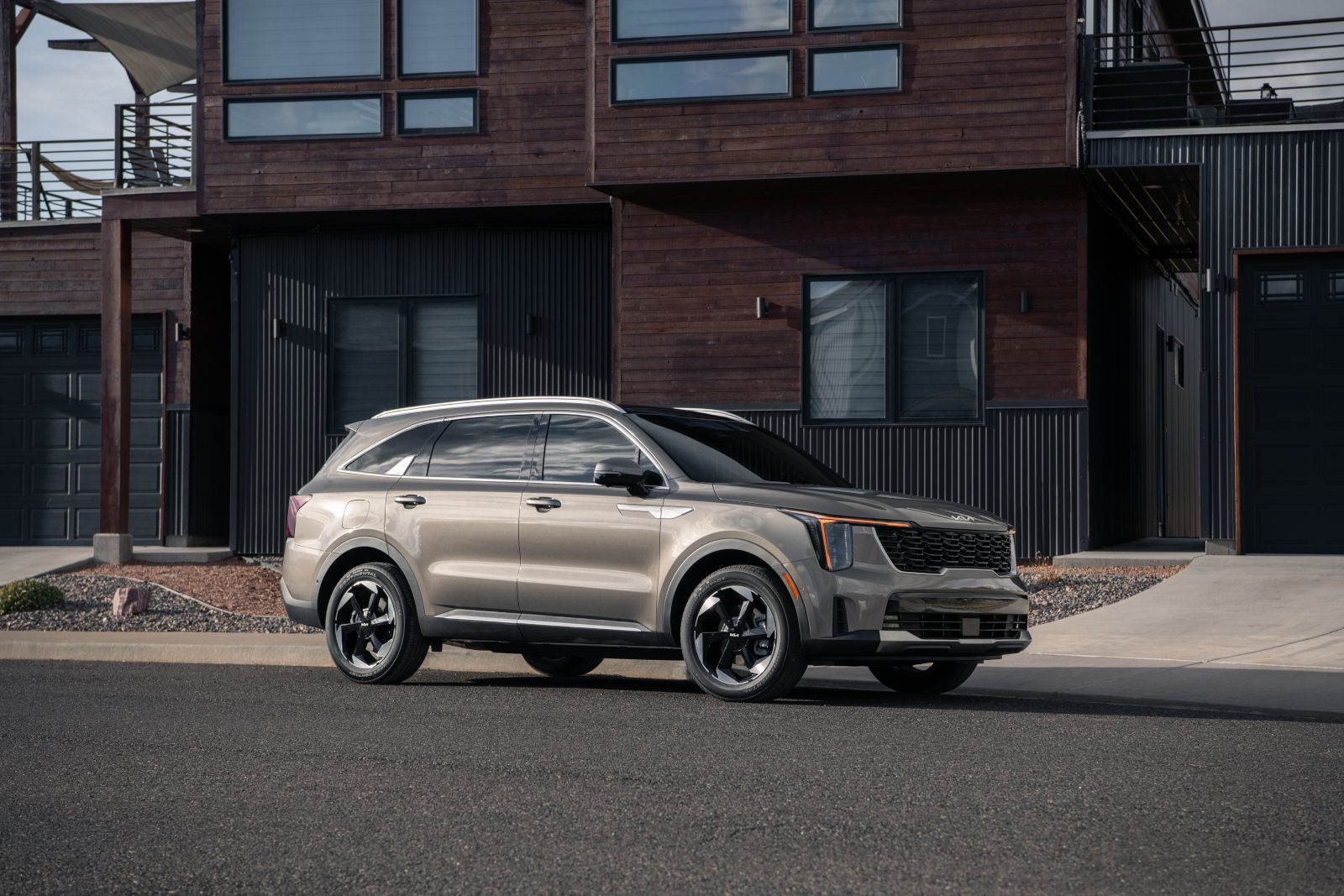
The 2026 Sportage HEV and Sorento HEV share Kia's proven 1.6-litre turbo hybrid powertrain and active all-wheel drive - but the Sportage delivers 4 more horsepower, better fuel economy, and a more advanced technology suite in a compact footprint that costs less to own. For Ontario drivers who want hybrid efficiency without the three-row size commitment, the Sportage HEV answers that need with sharper performance and lower running costs.
Both vehicles handle 907 kg of towing and come standard with AWD.
|
Feature |
2026 Sportage HEV |
2026 Sorento HEV |
|
Horsepower |
231 hp |
227 hp |
|
Torque |
Not specified |
258 lb-ft |
|
Fuel Economy (Combined) |
6.7 L/100km |
7.0 L/100km |
|
Cargo Volume |
1,119 L |
357 - 2,139 L |
|
Towing Capacity |
907 kg (2,000 lb) |
750 - 907 kg (1,653 - 2,000 lb) |
The 4 hp Gap - and What It Actually Means
The Sportage HEV's hybrid system produces 231 hp from its 1.6-litre turbo GDI engine and 47.7 kW electric motor, while the Sorento HEV delivers 227 hp from the same base architecture. Both use a 6-speed automatic transmission and permanent AWD.
That 4 hp difference translates to slightly quicker throttle response in city merging and highway passing - scenarios where the Sportage's lighter curb weight amplifies the advantage. The Sorento HEV counters with 258 lb-ft of torque, which matters more for low-speed towing launches and steep grade climbing.
For Ontario drivers who prioritize responsive acceleration over maximum torque delivery, the Sportage HEV's power-to-weight ratio delivers the more engaging daily drive - without sacrificing the 907 kg towing capacity both vehicles share.
Where the 0.3 L/100km Efficiency Advantage Compounds
The Sportage HEV achieves 6.7 L/100km combined fuel economy versus the Sorento HEV's 7.0 L/100km. Over 20,000 km of annual driving - typical for Ontario commuters covering GTA-to-cottage routes - that 0.3 L/100km gap saves roughly 60 litres of fuel annually.
The Sorento HEV's split fuel economy (7.2 L/100km city, 6.7 L/100km highway) shows it performs better on open roads, while the Sportage HEV's combined rating suggests more consistent efficiency across mixed driving. For buyers who spend more time in stop-and-go traffic than on Highway 401, the Sportage's hybrid system delivers stronger regenerative braking recovery and electric-assist optimization.
Both vehicles use Drive Mode Select to balance performance and efficiency, but the Sportage HEV's lighter platform means the electric motor handles a greater share of low-speed propulsion - the core advantage of any hybrid system.
Dual 12.3-Inch Displays Standard vs Trim-Dependent Upgrades

The Sportage HEV includes dual 12.3-inch panoramic displays across all three trims (EX HEV, EX Premium HEV, SX HEV), with wireless Apple CarPlay and Android Auto standard. The Sorento HEV offers a 12.3-inch multimedia interface and 12.3-inch supervision cluster, but the base LX trim starts with a smaller 4-inch TFT display and 6-speaker audio.
The Sportage HEV's tech suite includes:
- 12.3-inch multi-colour reconfigurable Driver Information Centre
- Kia Connect with over-the-air software updates
- Available 10-inch head-up display
- Smart Cruise Control 2 with Stop & Go
The Sorento HEV SX adds navigation, Bose premium audio, and a digital key, but those features require stepping up from the base trim. For buyers who want the full digital cockpit without trim negotiation, the Sportage HEV delivers it from the entry EX HEV model.
1,119 L Fixed vs 2,139 L Expandable: The Cargo Trade-Off
The Sportage HEV offers 1,119 litres of cargo volume with a dual-level cargo floor for flexible storage configurations. The Sorento HEV's cargo range spans 357 litres (third row up) to 2,139 litres (all seats folded), reflecting its three-row architecture.
For Ontario families who regularly transport more than five passengers or need maximum weekend hauling capacity, the Sorento HEV's expandable cargo justifies its larger footprint. For couples or small families who prioritize daily manoeuvrability over occasional maximum capacity, the Sportage HEV's 1,119 litres handles typical grocery runs, sports equipment, and camping gear.
Both vehicles include roof rails for additional cargo-carrying options.
Shared Safety Architecture, Different Feature Deployment
Both vehicles use Kia's latest driver assistance systems, but feature availability varies by trim. The Sportage HEV includes:
- Forward Collision-Avoidance Assist 1.5
- Lane Following Assist 2
- Lane Keeping Assist
- Parking Distance Warning (forward/rear)
- Rear Occupant Alert
- 8 airbags
The Sorento HEV adds:
- Forward Collision-Avoidance Assist 2 (upgraded sensor suite)
- Highway Drive Assist 2 (lane-centring with adaptive cruise)
- Surround View Monitor
- Parking Collision Avoidance Assist (reverse)
- Blind View Monitor
The Sorento HEV's Highway Drive Assist 2 provides semi-autonomous lane-centring on 400-series highways, while the Sportage HEV's Lane Following Assist 2 offers active lane-centring with steering correction. For drivers who cover long Highway 401 stretches between Toronto and Ottawa, the Sorento HEV's HDA 2 reduces fatigue on extended trips - which matters more for buyers who frequently drive beyond the GTA.
-
Three Trims, One Powertrain
The Sportage HEV lineup includes:
- EX HEV AWD: $41,245 (dual displays, heated seats, wireless smartphone integration)
- EX Premium HEV AWD: $44,245 (adds premium features)
- SX HEV AWD: $47,745 (top-tier trim with full tech suite)
The Sorento HEV offers LX, EX, and SX trims with AWD standard. The Sportage HEV's transparent three-trim structure simplifies the buying decision - every trim gets the same 231 hp hybrid powertrain, 6.7 L/100km efficiency, and dual 12.3-inch displays.
For buyers who want predictable feature progression without base-trim compromises, the Sportage HEV's EX starting point delivers the core hybrid advantage at $41,245.
The Verdict: Compact Efficiency Over Three-Row Flexibility
The Sportage HEV wins for Ontario drivers who want hybrid fuel savings, active AWD, and modern technology in a compact SUV that fits urban parking and costs less to fuel. The 6.7 L/100km combined rating, 231 hp output, and dual 12.3-inch displays deliver the hybrid experience without the three-row commitment or trim-level feature gatekeeping.
The Sorento HEV justifies its larger footprint for families who need three-row seating or expandable cargo up to 2,139 litres - but for buyers who don't require that occasional maximum capacity, the Sportage HEV's 1,119 litres handles daily life more efficiently.
For GTA commuters covering mixed city and highway routes who prioritize fuel economy over maximum cargo flexibility, the Sportage HEV delivers stronger efficiency, sharper performance, and a more complete standard technology package - with AWD standard across all three trims. Visit Planet Kia in Brandon to confirm current availability and explore how the Sportage HEV's compact hybrid platform fits your driving needs.
To learn more about the 2026 Kia Sportage HEV, visit Kia.ca
