

How the 2027 Kia Sorento PHEV’s Electric Range Cuts Daily Gas Stops
September 23 2026,
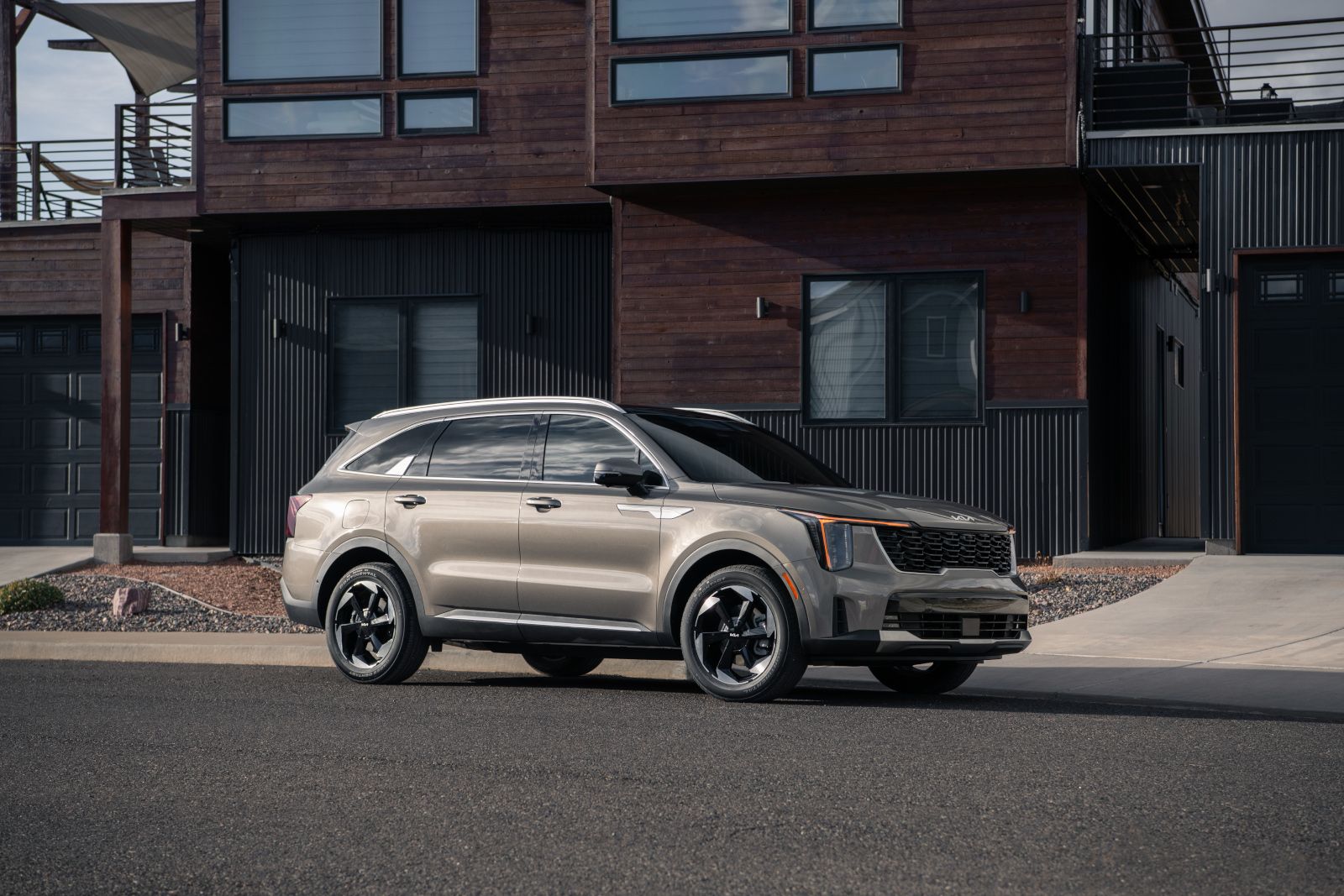
Most Manitoba driving is short: a school run, a grocery trip, a commute across town. The 2027 Kia Sorento PHEV is built around that reality, letting a three-row SUV run on electric power for the errands that make up most of a week, while keeping a gasoline engine on standby for the rest.
This isn’t a vehicle that demands you rethink how you drive. It’s one that quietly changes how often you visit a gas station, provided your routine includes a place to plug in.
What the Sorento PHEV Actually Is
The Sorento PHEV pairs a 1.6 L turbocharged four-cylinder engine with a 13.8 kWh lithium-ion polymer battery and an electric motor, producing a combined 268 horsepower and 270 lb-ft of torque. Unlike the standard Sorento Hybrid, which carries a small 1.49 kWh battery meant only to assist the engine, the PHEV’s larger battery can drive the vehicle on electricity alone.
That difference in battery size is the entire story. The Hybrid supports the gas engine; the PHEV can replace it for a stretch of driving before the gas engine ever needs to start.
How the Plug-In System Works
A full charge delivers 55 km of electric range. On a level 240V home charger, the battery recharges in about 3.8 hours, meaning a Sorento PHEV plugged in overnight is ready to run on electricity again the next morning.
Once the battery is depleted, the gasoline engine takes over automatically, and the SUV drives like any other Sorento, returning 6.9 L/100 km in gasoline-only operation. There’s no separate mode to manage and no risk of being stranded: the 47 L fuel tank is always there as a backup.
That handoff between electric and gas power is what makes the plug-in layout different from a fully electric SUV. You get the quiet, low-cost driving of an EV for routine trips, without giving up the range and refuelling speed of a gas vehicle for longer days.
|
PHEV Trait |
Figure |
|
Electric range |
55 km |
|
Home charge time (240V) |
3.8 hours |
|
Gasoline-only fuel economy |
6.9 L/100 km |
|
Fuel tank capacity |
47 L |
|
Max trailer weight, properly equipped |
2,000 lbs (907 kg) |
Why This Matters for Everyday Ownership

A 55 km electric range covers a lot of ground for a household running school drop-offs, grocery runs, and appointment days within a city. If the battery is charged overnight and depleted during the day, the gas engine simply hasn’t been needed yet, and the fuel gauge hasn’t moved.
The pattern that determines how much gas you actually buy isn’t the vehicle, it’s the routine. A driver who charges every night and keeps daily distances under roughly 55 km can go through most of a week without visiting a pump. A driver who skips charging or regularly drives further than the battery covers will lean on the gas engine more, which is exactly what it’s there for.
Winter changes the math slightly, since cold weather affects any battery’s usable range, but the gas engine’s presence means that variability doesn’t turn into a planning problem. Longer weekend trips, mixed road conditions, or a week without access to a charger simply shift the Sorento PHEV into behaving like a standard gas-and-hybrid SUV.
The Sorento PHEV also comes with AWD, 176 mm of ground clearance, and a standard towing capacity of 1,650 lbs (748 kg), rising to 2,000 lbs (907 kg) when properly equipped, which keeps it usable through Manitoba’s seasonal driving conditions rather than positioning it as a fair-weather-only option.
Who Benefits Most From the Plug-In Layout
The Sorento PHEV suits a household with predictable, repeatable driving: the same commute, the same school route, the same weekly errands, and a charger at home or work. That’s where the 55 km range gets used every single day instead of sitting unused.
A family whose daily mileage regularly exceeds the battery’s range, or who can’t charge consistently, won’t see the same benefit; the vehicle will spend more time running on gasoline, and the extra battery weight becomes less of an advantage than it would be for a shorter-range household.
The three-row layout matters here too. Seating for up to six, cargo space of 2,139 L behind the first row and 357 L behind the third row, and 50:50 second- and third-row folding seats mean the plug-in setup doesn’t come at the cost of family-hauling flexibility. A weekday commute on electric power and a weekend trip with the third row up for extra passengers both fit the same vehicle.
Planning Your Sorento PHEV Around Your Routine
The 2027 Sorento PHEV pairs a 55 km electric range with a full gasoline backup, letting daily driving happen on electric power while longer trips and inconsistent charging still work through the standard fuel system. How much of that range gets used comes down to charging habits and daily distance.
Visit Planet Kia in Brandon to talk through charging expectations, trim availability, and whether the Sorento PHEV’s plug-in setup fits your household’s daily driving pattern before it arrives.
To learn more about the 2026 Kia Sorento PHEV, visit Kia.ca
